
Mechanism to resistance
Read the draft explanation
Each antibiotic works by disrupting a bacterial process.
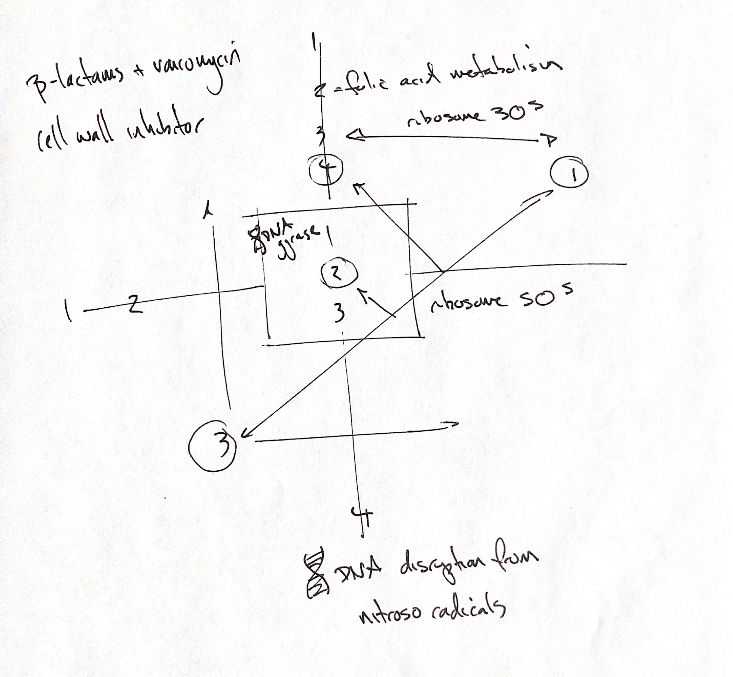
β-lactams, including penicillins and cephalosporins, inhibit penicillin-binding proteins, or PBPs. This impairs peptidoglycan cross-linking in the cell wall. Vancomycin binds D-Ala-D-Ala on wall precursors. It hits a different target in the same pathway.
Sulfonamides block an early step in folate synthesis. Trimethoprim blocks dihydrofolate reductase, or DHFR, reducing tetrahydrofolate formation. Together, they block two steps in sequence.
At the ribosome, doxycycline and other tetracyclines act at 30S. So do aminoglycosides such as gentamicin and amikacin, which also have some 50S interactions. Erythromycin and other macrolides, clindamycin and chloramphenicol act at 50S.
Enrofloxacin and other fluoroquinolones inhibit DNA gyrase and topoisomerase IV. This disrupts DNA replication. Aminoglycoside uptake across the cytoplasmic membrane needs energy and is linked to oxygen. This explains their lack of useful activity against obligate anaerobes. Metronidazole enters by diffusion, then needs reductive activation. Reactive products, including nitroso species, are linked to DNA damage and impaired synthesis.
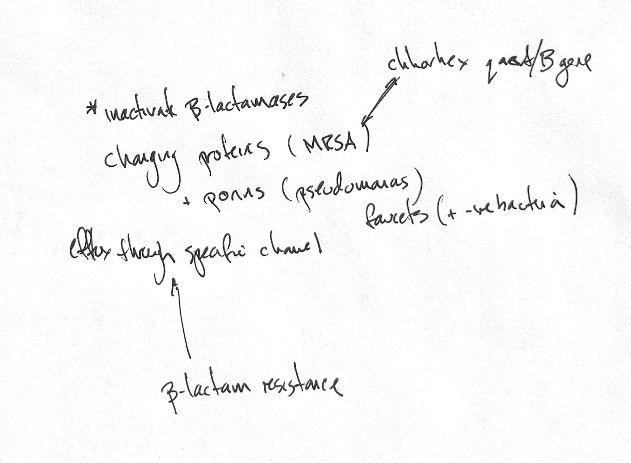
Bacteria can resist β-lactams in three main ways. First, intrinsic or acquired β-lactamases hydrolyse the ring. Their effect depends on the drug and enzyme. Second, they can change the target. In typical MRSA, mecA encodes PBP2a, which has low affinity for many β-lactams. Wall cross-linking can continue. Plasmid-borne mecB has also been reported in S. aureus; it is a separate mechanism. Third, bacteria can reduce entry by changing porin numbers or selectivity. Loss of Pseudomonas OprD reduces imipenem uptake. The effect depends on the drug.
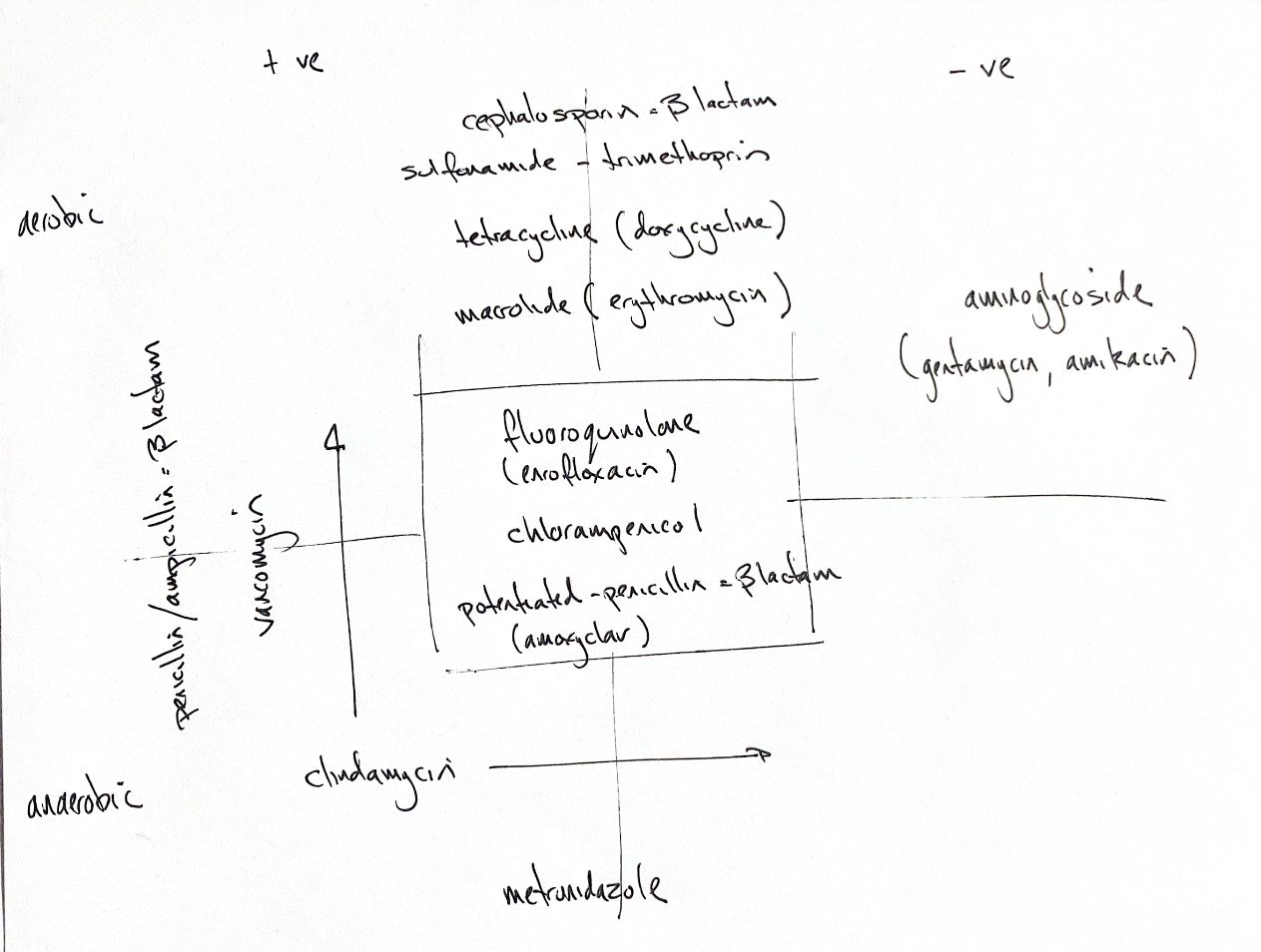
Use the companion spectrum key to link these targets with Gram stain and oxygen needs.
Original questions: “what is the mechanism of action of different antibiotics”; “how do bacteria develop beta-lactam resistance”.
References
Bryan & Kwan 1983; Sisson et al. 2000; Huang & Hancock 1993; Lim & Strynadka 2002; Becker et al. 2018, doi:10.3201/eid2402.171074.