
The common antibiotic-spectrum key
Read the draft explanation
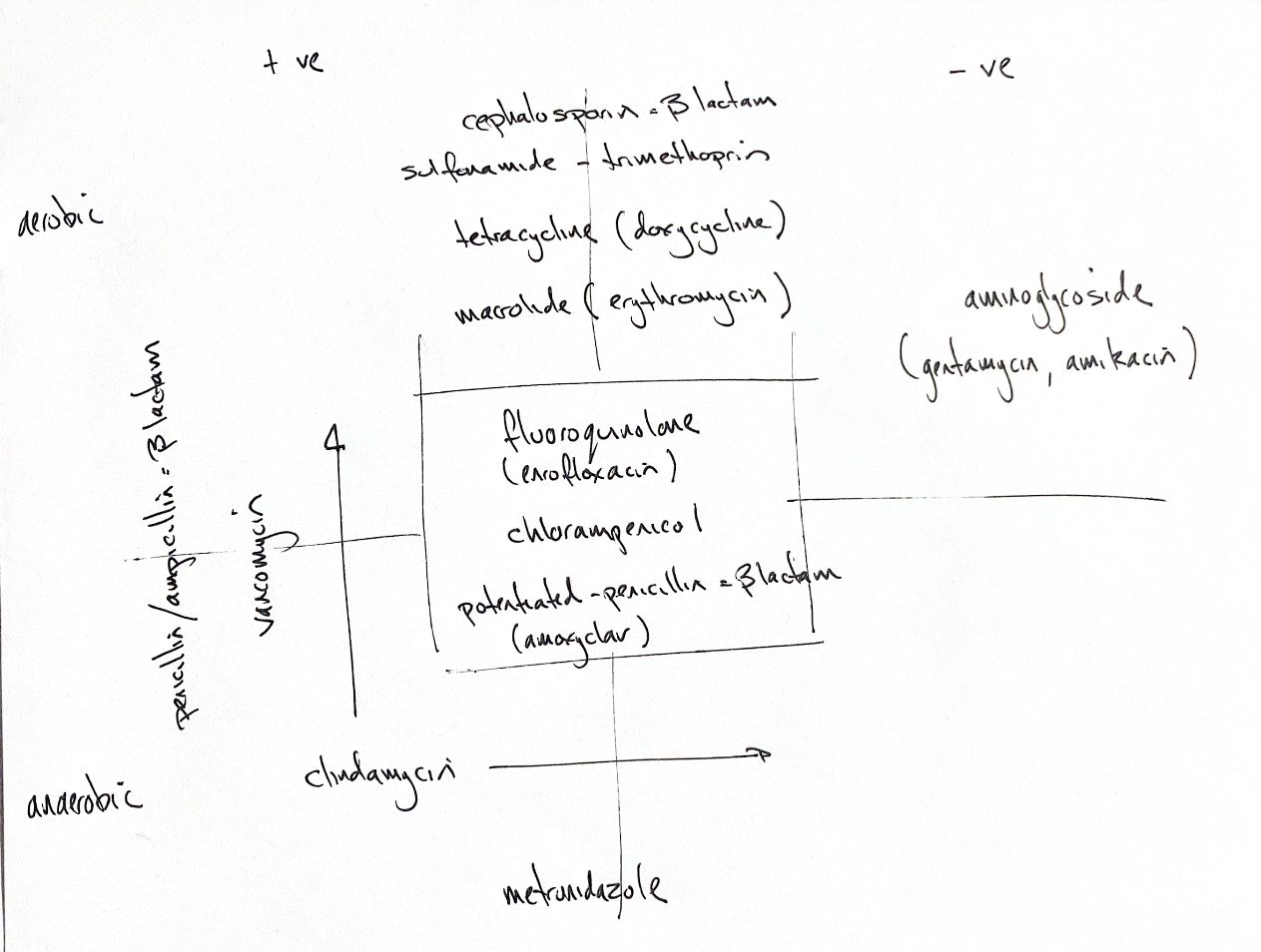
Start with two questions: is the bacterium Gram-positive or Gram-negative? Does it grow with oxygen or without it? Those two questions give us the four quadrants of the spectrum map.
Vancomycin covers Gram-positive bacteria. Aminoglycosides mainly cover aerobic Gram-negatives and susceptible staphylococci. Clindamycin covers Gram-positive aerobes and many anaerobes. Metronidazole targets obligate anaerobes.
Penicillin, ampicillin, cephalosporins and amoxicillin–clavulanate all belong to the β-lactam family. Their coverage differs. For cephalosporins, both the generation and the individual drug matter. The companion key also places potentiated sulfonamides, doxycycline, erythromycin, enrofloxacin and chloramphenicol, including their gaps in coverage. A broad spectrum still leaves resistant organisms.
Why pair gentamicin with Staphylococcus and amikacin with Pseudomonas? These pairings come from relative activity in laboratory studies. One historical study of human isolates found greater gentamicin activity against S. aureus. Another found that amikacin remained active against many gentamicin-resistant Gram-negatives, including P. aeruginosa. Both drugs can cover susceptible strains of both organisms. To apply those findings, we need the isolate's susceptibility, the test method and the exposure we can achieve.
References
Johnston & Tobias, Veterinary Surgery: Small Animal, 2nd ed., Chs 6 and 10; Forgan-Smith & McSweeney 1978, PMID 282852; Dámaso et al. 1976, PMID 825591.
https://pubmed.ncbi.nlm.nih.gov/282852/
https://pubmed.ncbi.nlm.nih.gov/825591/