
Open healing over a moving joint
Read the draft explanation
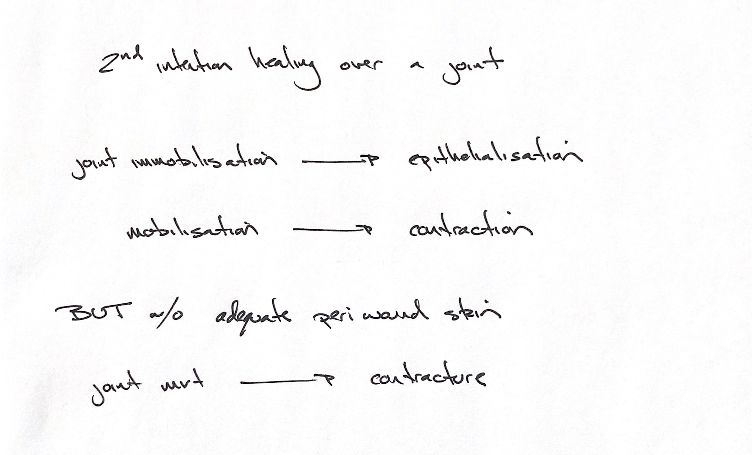
Over the flexor surface of a joint, movement changes how an open wound closes.
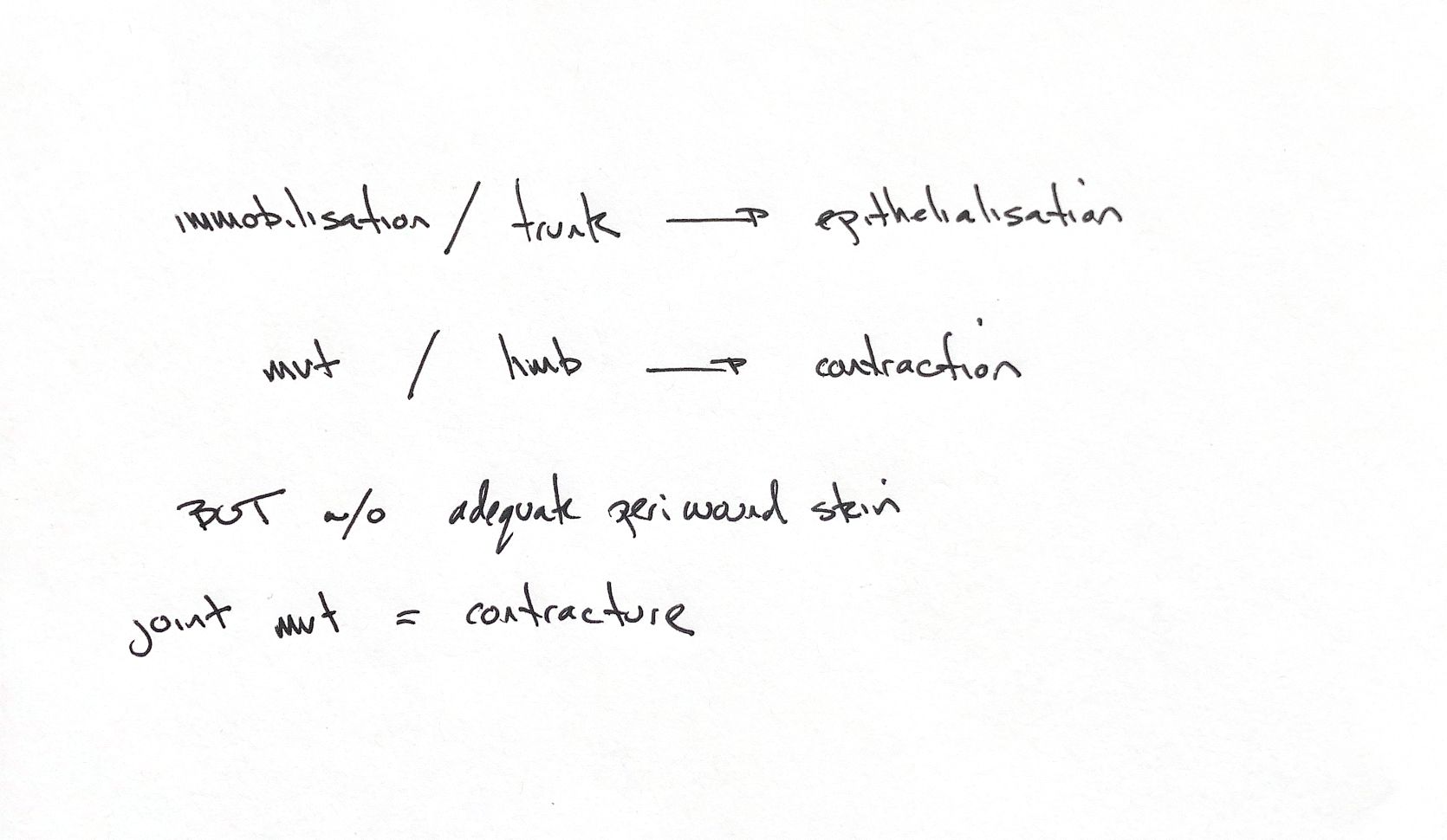
Immobilisation favours epithelialisation. Movement favours contraction. Movement can help only if enough mobile skin surrounds the wound to close the defect and the underlying musculoskeletal tissues do not need stabilisation.
With too little skin, contraction can become contracture. A tight scar crosses the flexor surface and limits joint extension. That makes the exact wound location, available skin and structural stability important. A wound near a joint may behave differently from one directly over its flexor surface.
Location also changes the balance elsewhere. Loose trunk and neck skin allows more contraction. Tighter skin on the extremities relies more on epithelialisation. This is the correction to the reversed trunk/limb relationship in the notes. Skin laxity and joint motion both matter, but they describe different effects.
References
My study drawings; Johnston & Tobias, Veterinary Surgery: Small Animal, 2nd ed., ch. 9 and ch. 19, “Wound Location.” The flexor-surface advice is expert guidance, including a cited personal communication; it has not been proven as a motion prescription for every joint wound.