
Primary, delayed primary, secondary closure and second intention
Read the draft explanation
The wound bed helps us name the type of closure.
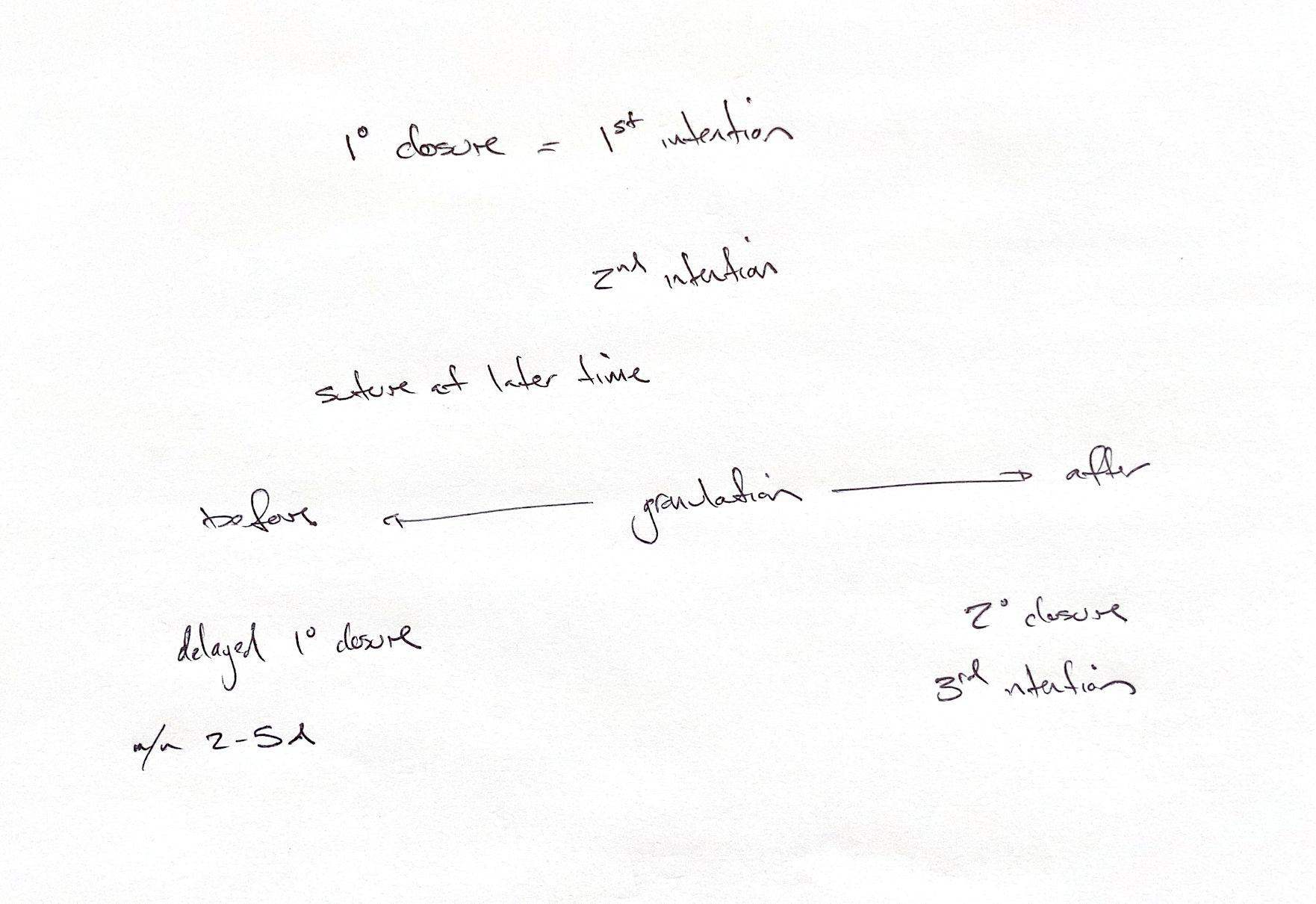
Primary closure brings the edges together at the first repair. The wound then heals by first intention. Leave it open, and it heals by second intention through contraction and epithelialisation.
If we wait before closing, look for granulation tissue. Delayed primary closure happens before a granulation bed has formed, usually within 2–5 days. Secondary closure happens after granulation tissue has formed. It is also called third intention here.
The key is the state of the wound bed when we close it, rather than the day alone. Secondary closure means later surgical apposition. Second-intention healing means leaving the wound to close through contraction and epithelialisation.
References
surgical study notes based on Veterinary Surgery: Small Animal, Johnston & Tobias, 2nd edition, 2018, chapter 75.