
NSAIDs - skin-wound models
Read the draft explanation
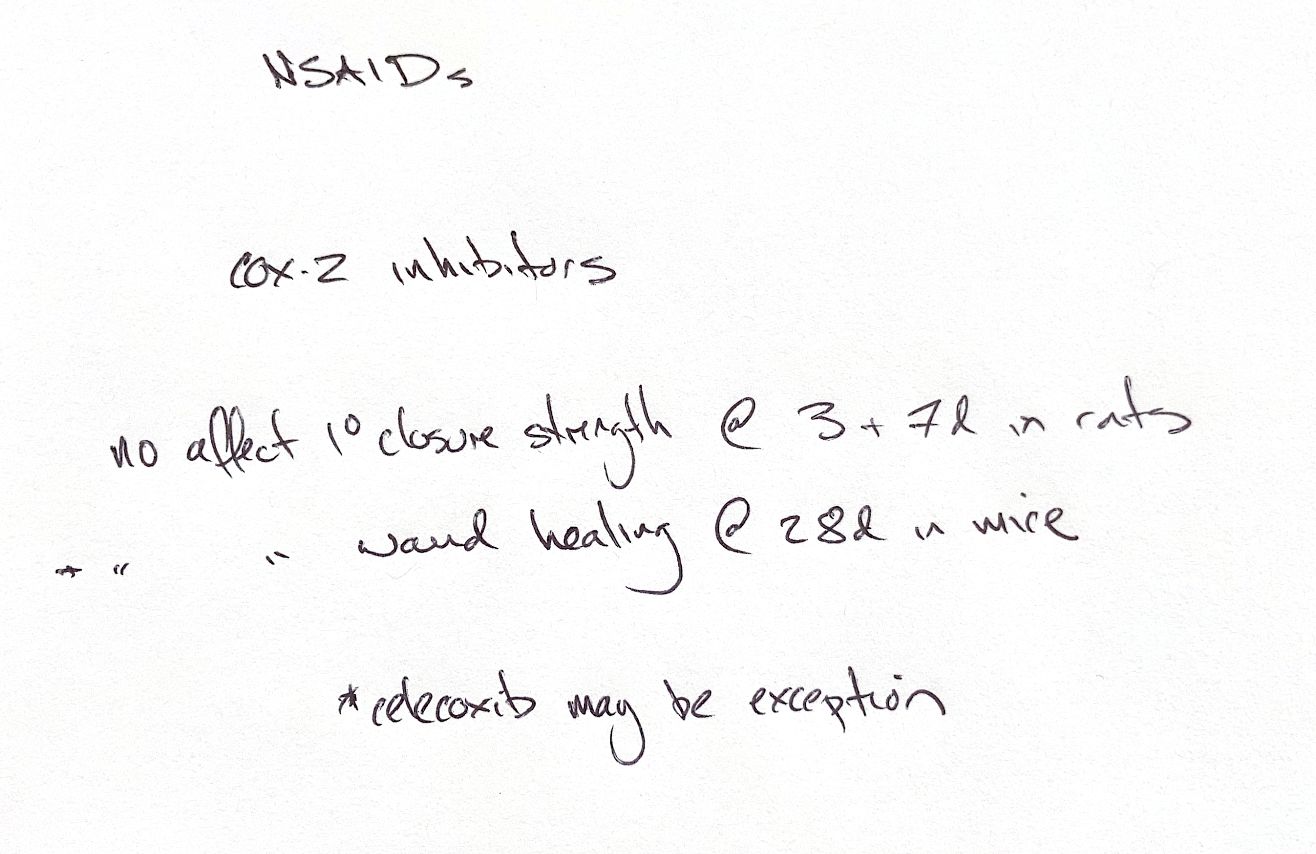
An NSAID’s effect on skin-wound healing depends on the drug and the wound being studied.
In rats, rofecoxib-treated and water-treated skin incisions had similar strength at days 3 and 7. In hairless SKH-1 mice with full-thickness sutured skin incisions, neither SC-791, a selective COX-2 inhibitor, nor diclofenac, a nonselective COX inhibitor, caused a detectable change in healing or recovery of tensile strength through day 28.
Celecoxib had a different result in C57BL/6J mice with open full-thickness skin wounds. At day 7, contraction and re-epithelialisation were reduced. Epithelial proliferation, new vessel growth and extracellular-matrix formation were also reduced.
These results apply to the drugs, wounds and outcomes tested. Other tissues and veterinary patients need their own evidence. In the rat rofecoxib study, similar skin-wound strength occurred alongside adverse outcomes in colonic anastomoses.
References
My surgical study notes; Johnston & Tobias, Veterinary Surgery: Small Animal, 2nd ed., ch. 75.
Cahill et al. BJS, 2004. https://doi.org/10.1002/bjs.4722
Blomme et al. Br J Dermatol, 2003. https://doi.org/10.1046/j.1365-2133.2003.05065.x
Fairweather et al. J Surg Res, 2015. https://doi.org/10.1016/j.jss.2014.12.026