
Thyroid, gastric, parathyroid and adrenal cell map
Read the draft explanation
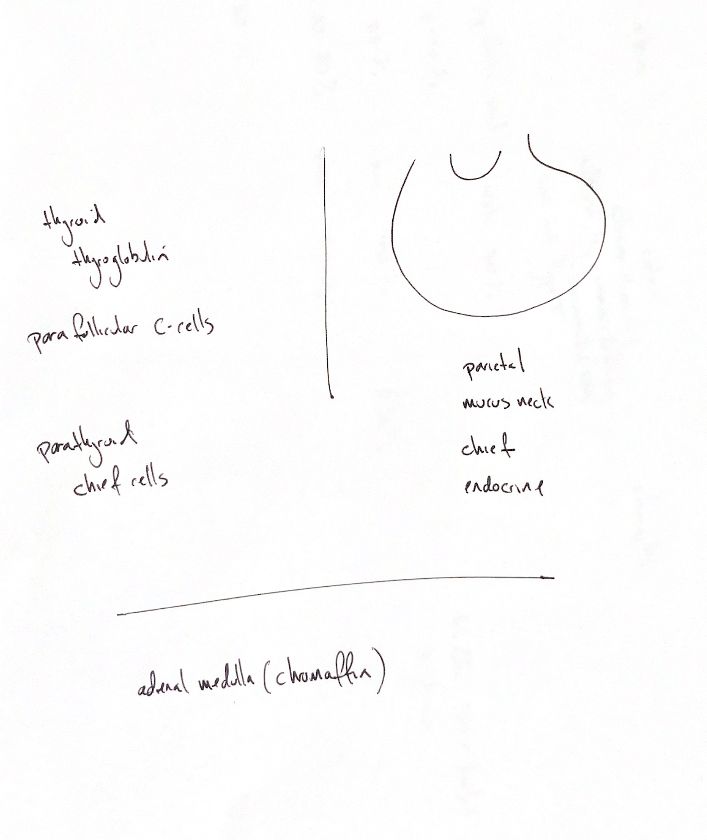
Start with the thyroid. Follicular cells make thyroglobulin, a glycoprotein used in thyroid hormone synthesis and storage. T3 and T4 are formed on this scaffold and later released. Thyroglobulin is a product, rather than the name of a cell. The separate parafollicular C cells produce calcitonin.
Parathyroid chief cells produce PTH. Gastric chief cells have a different job: they release pepsinogen. Acid converts pepsinogen to pepsin, which breaks down proteins.
The gastric group also includes parietal, mucous neck and endocrine cells. Parietal cells secrete hydrogen ions into the gastric lumen. Mucous neck cells secrete mucus that helps protect the glandular cells from acid and proteases.
Intrinsic-factor production also differs between dogs and cats. Dogs have a gastric contribution, but their major intrinsic-factor source is pancreatic. Feline intrinsic factor is pancreatic. Intrinsic factor binds B12 and supports its ileal absorption.
Gastric endocrine cells are a mixed population with products including gastrin, histamine and serotonin. This does not mean one cell makes all three. Gastrin cells are mainly in the pyloric antrum in dogs; histamine also has mast-cell stores.
In the adrenal medulla, chromaffin cells release the catecholamines epinephrine and norepinephrine into the blood during sympathetic stimulation.
References
Johnston & Tobias, 2nd ed., Ch91,120,121; Simpson et al. 1993; ACVIM 2023.