
Adrenal zones, steroid transport and catecholamines
Read the draft explanation
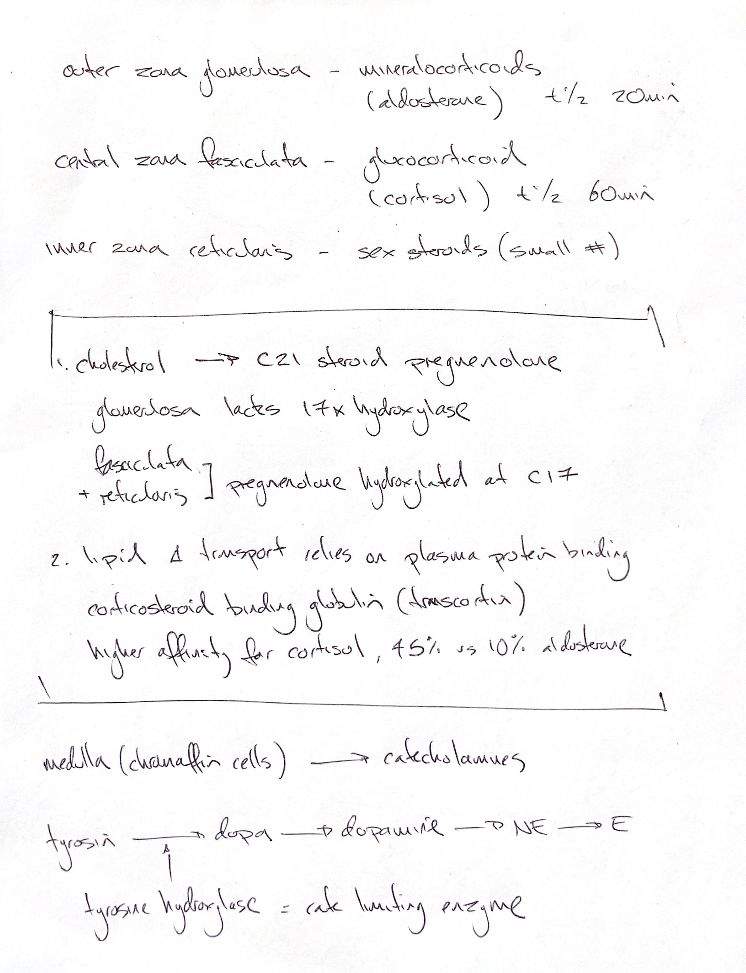
Read the cortex from outside in. The zona glomerulosa makes mineralocorticoids, including aldosterone. The middle zona fasciculata makes most cortisol, a glucocorticoid. The inner zona reticularis is the sex-steroid memory cue. Normal adrenal sex-steroid output is small. The fasciculata and reticularis both contribute glucocorticoids and sex steroids, so the rows are not exclusive compartments.
Cholesterol is the starting material. Side-chain cleavage forms the C21 steroid pregnenolone. The glomerulosa lacks 17α-hydroxylase. The fasciculata and reticularis can hydroxylate at C17. This is one step in a longer pathway, not a single reaction that makes cortisol.
These lipid-soluble hormones travel partly bound to plasma proteins. Corticosteroid-binding globulin, or transcortin, has a high affinity for cortisol. My drawing says 45% of plasma cortisol is CBG-bound; the supplied book says 75%. Both give 10% for aldosterone. These are fractions of hormone bound, not percentages of affinity. Their exact species and study basis remain unverified; binding varies with conditions.
The source/book clearance half-life cues are about 20 minutes for aldosterone and 60 minutes for cortisol. They are not durations of action or medication intervals, and are not fixed values for every dog or cat.
In the medulla, chromaffin cells make catecholamines: tyrosine → DOPA → dopamine → norepinephrine (NE) → epinephrine (E). Tyrosine hydroxylase controls the first, rate-limiting step.
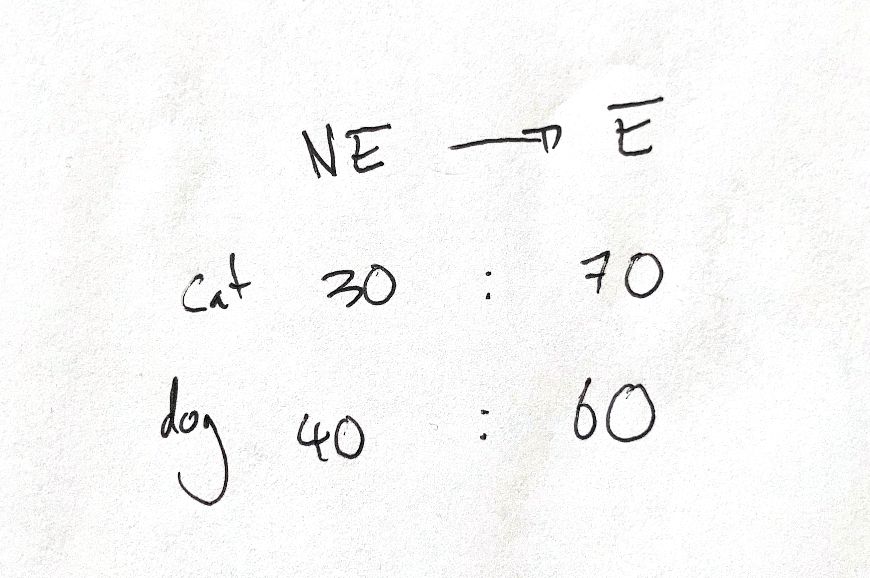
The NE:E memory ratios are cat 30:70 and dog 40:60. These are approximate book summaries, not constant plasma ratios or cell counts. Primary adrenal-release experiments give different ratios with species and test conditions; the exact origin of the book pair remains unverified.
References
Johnston & Tobias, 2nd ed., Ch120; Sanders 2016; Gayrard 1996; Critchley 1980; Johnson 1975.