
Biofilm formation and protection
Read the draft explanation
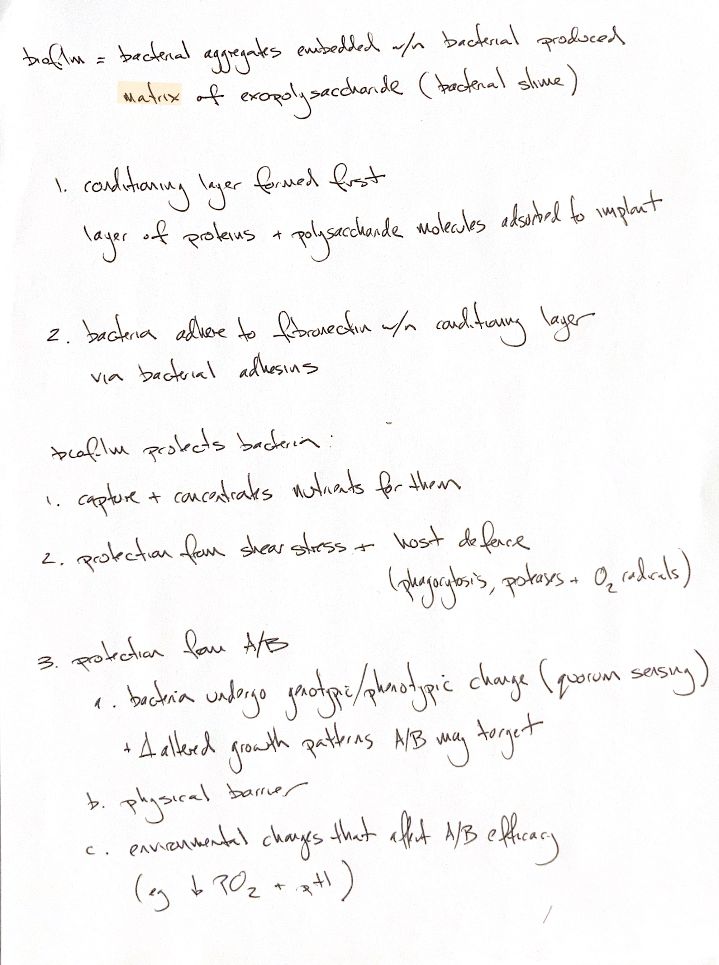
A biofilm is a group of bacteria embedded in a matrix they produce. The exopolysaccharide matrix forms a bacterial slime. On an implant, host proteins and polysaccharides first form a conditioning layer. Bacterial adhesins then bind fibronectin within that layer. The bacteria attach and build their own matrix around the community.
The matrix captures and concentrates nutrients. It also shelters bacteria from shear stress and host defences, including phagocytosis, proteases and oxygen radicals.
Antibiotics face several problems. Quorum sensing lets bacteria respond to population-density signals and change gene expression and phenotype. This does not require a new mutation. Slow or quiescent growth makes drugs that depend on active growth less effective. The matrix can limit penetration of some drugs. Conditions inside the biofilm, including lower oxygen tension and lower pH, can also reduce antibiotic activity. These mechanisms depend on the organism, drug and local environment.
References
Johnston & Tobias, Veterinary Surgery: Small Animal, 2nd ed., chapter 47, implant-associated infections and biofilm mechanisms. Original study drawing: Chris Wood.