
Contact layer to bandage change
Read the draft explanation
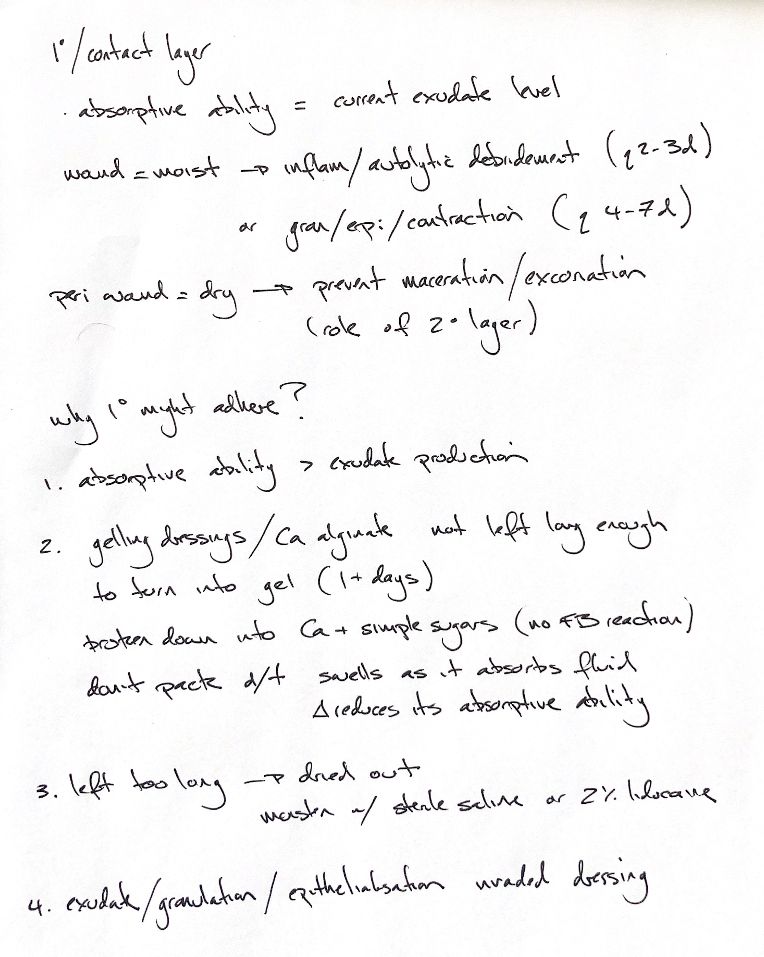
Keep the wound moist and the skin around it dry. Choose a contact layer that matches how much fluid the wound produces.
The primary layer supports inflammation and autolytic debridement, then granulation, epithelialisation and contraction. The secondary layer draws away excess fluid. This helps prevent maceration and excoriation of the surrounding skin.
For a noninfected wound under a moisture-retentive dressing, changes may be every 2–3 days during inflammation and debridement, then every 4–7 days during repair. Adjust this to wound stage, fluid output and dressing saturation. Infected wounds usually need more frequent changes.
Dressings stick for four reasons: they absorb more fluid than the wound supplies, are removed before they gel, dry out during prolonged wear, or trap dried exudate or healing tissue. Calcium alginate needs moisture and at least 1 day to gel. Tight packing limits its swelling and absorption. Retained fragments can break down into calcium ions and simple sugars without a foreign-body reaction.
If a dressing sticks, sterile saline or 2% lignocaine (lidocaine) applied a few minutes before removal may help. This does not work for dried hydrophobic petrolatum dressings.
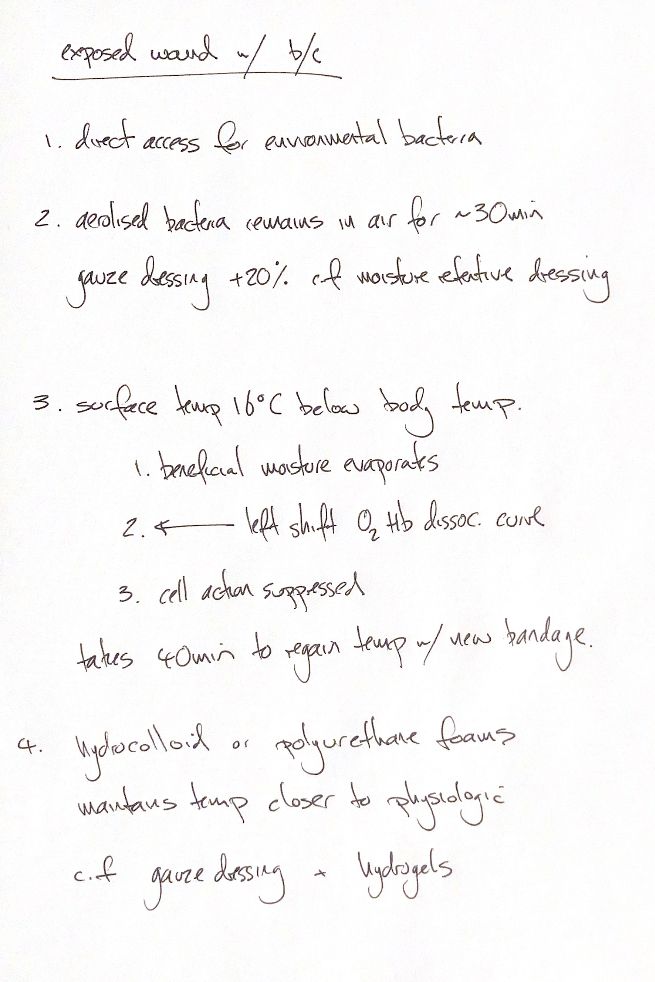
Removal exposes the wound to environmental bacteria and releases organisms into the air. Dry gauze produced 20% more aerosolisation than moisture-retentive dressings; airborne organisms persisted for 30 minutes or longer.
Cooling reduces oxygen unloading by shifting the oxygen–haemoglobin curve left. It also slows mitotic, leukocytic and proteolytic activity as moisture evaporates. The reported 16°C temperature deficit and 40-minute recovery came from an unspecified thermal model. Hydrocolloid and foam dressings keep wounds closer to physiological temperature than gauze or some hydrogels.
References
Campbell, Bandages and Drains, in Johnston & Tobias, Veterinary Surgery: Small Animal, 2nd ed., ch.19. Aerosol reference: Lawrence et al., Lancet 1992;339:807, https://pubmed.ncbi.nlm.nih.gov/1347823/.