
Emergency surgery · Dogs and cats
Urinary blockage in dogs and cats
A urinary blockage stops urine leaving the bladder. The team first treats the blockage and any problems it has caused. A blockage does not always mean an operation.
Overview
Where does urine get stuck?
The bladder stores urine. The urethra is the tube that carries it out of the body. If that tube is blocked, the bladder cannot empty normally. Stones, soft plugs of mucus or other material, scarring or other disease can cause a blockage. A pet can be blocked without having bladder stones.
A blockage can damage the bladder and kidneys. Changes in the blood, including a build-up of potassium, can affect the heart. This is why difficulty passing urine needs urgent veterinary assessment.
The next decision is whether urine flow can be restored with a thin drainage tube called a catheter, and whether stones or damaged tissue need surgery. Not every blocked pet needs an operation.
Signs and symptoms
Your pet may repeatedly try to urinate, pass only drops, have bloody urine or seem painful. Cats may visit the litter tray repeatedly, lick the genital area or appear to be constipated. With a complete blockage, they may stop eating, vomit or become weak.
Seek urgent assessment if your pet is struggling to pass urine. You do not need to wait until they are vomiting or weak.
Diagnosis
The team examines your pet and checks the bladder. Blood tests assess kidney function and salts in the blood, called electrolytes. One of these, potassium, can affect the heart if its level is too high.
Urine tests, X-rays or ultrasound help identify the cause. Some pets need contrast X-rays: a special fluid makes the urinary tract easier to see so the team can check for narrowing or leakage.
Tell the veterinary team about previous blockages, stones, catheter placement and surgery. Treatment to relieve the blockage and correct dangerous blood changes starts while the cause is investigated.
Treatment
Relieving the blockage first
A urinary catheter is a thin tube used to drain the bladder. It may be used to relieve the blockage and restore urine flow. Your pet may need fluids, pain relief and hospital monitoring before a surgical decision. If the tube cannot be passed, the team assesses another way to drain urine safely.
If surgery is not needed
Once urine flow has been restored, some pets continue treatment without an operation. Their plan may include pain relief, treatment for the cause, and changes to diet, water intake or, for cats, their home environment. Follow-up care still matters because a blockage can return.
When surgery is needed
Some pets need surgery to remove stones or create a new urinary opening. These operations do different jobs; a pet may need one or a combination. General anaesthesia keeps your pet asleep during surgery.
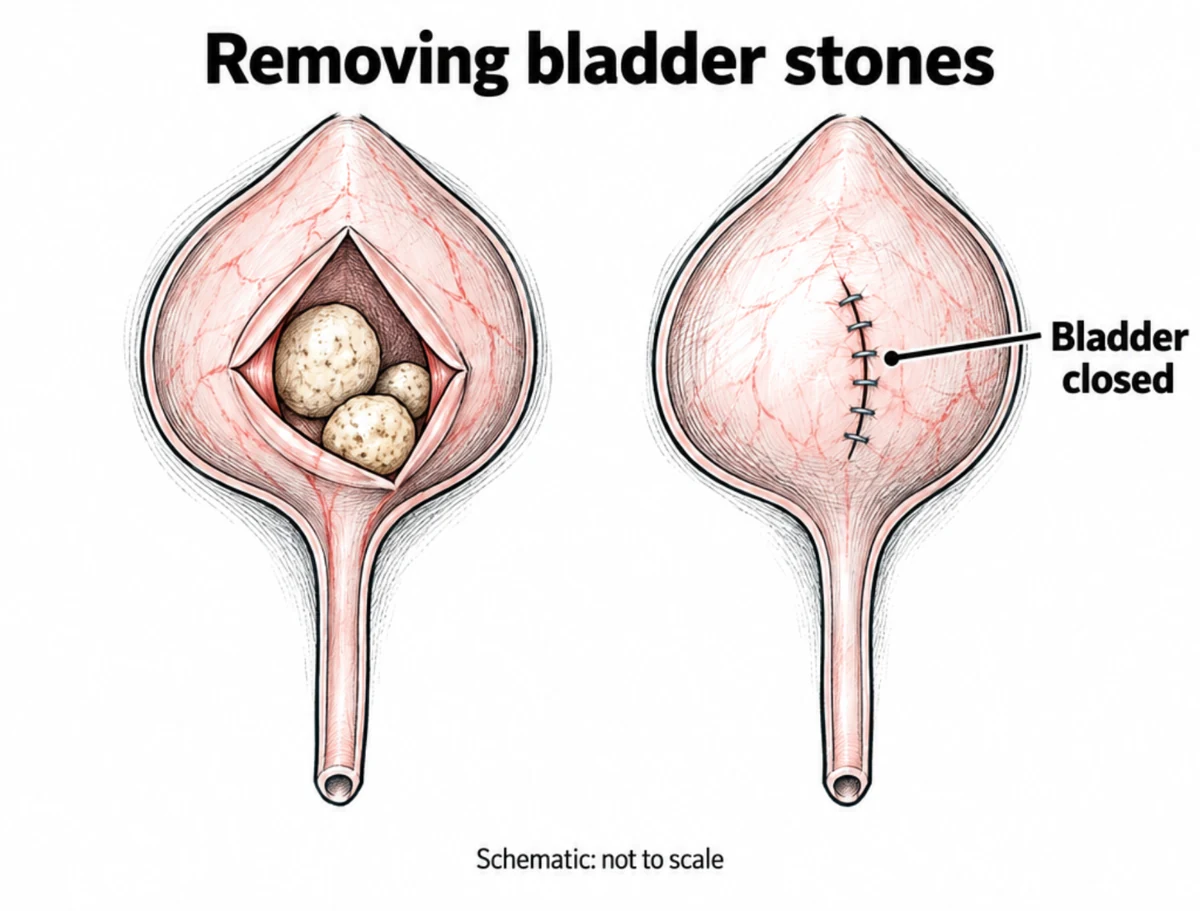
Removing bladder stones (cystotomy)
A cystotomy is an opening into the bladder. Stones are removed and the urinary tract is checked for remaining stones. It may be needed in either a dog or a cat, sometimes alongside another urinary operation. Stone analysis helps plan prevention afterward.
Some stones can be dissolved or removed by other methods. Those options depend on the stone and your pet’s condition; diet cannot relieve an active blockage quickly enough.
Open the section for your pet to see the other surgical options.
For dogs: trapped stones and new openings
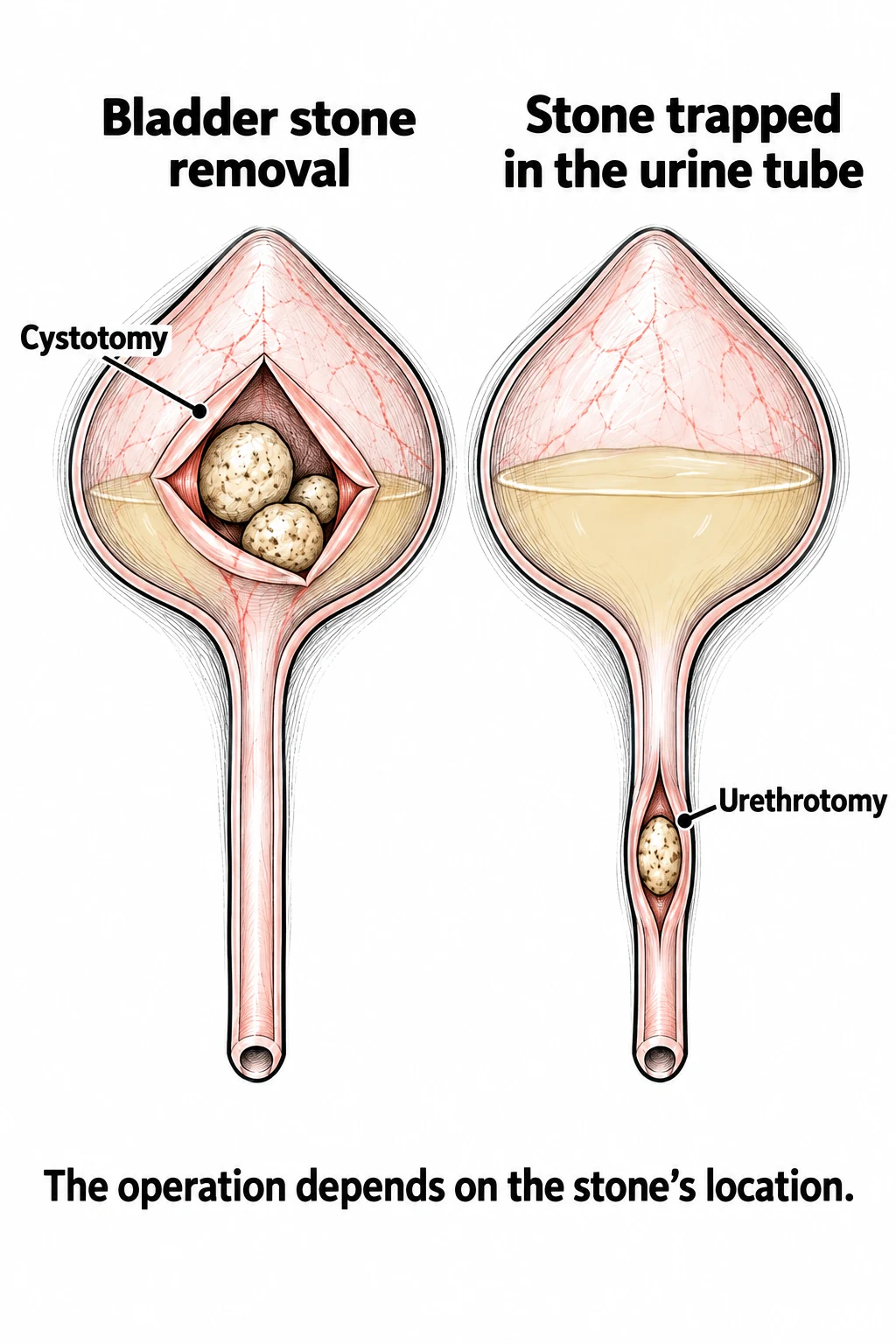
Removing a stone trapped in the urine tube (urethrotomy)
If a stone cannot be flushed out of the urethra into the bladder, a urethrotomy may be needed: an incision into the urethra to remove it. This removes the trapped stone; it does not create a permanent outlet.
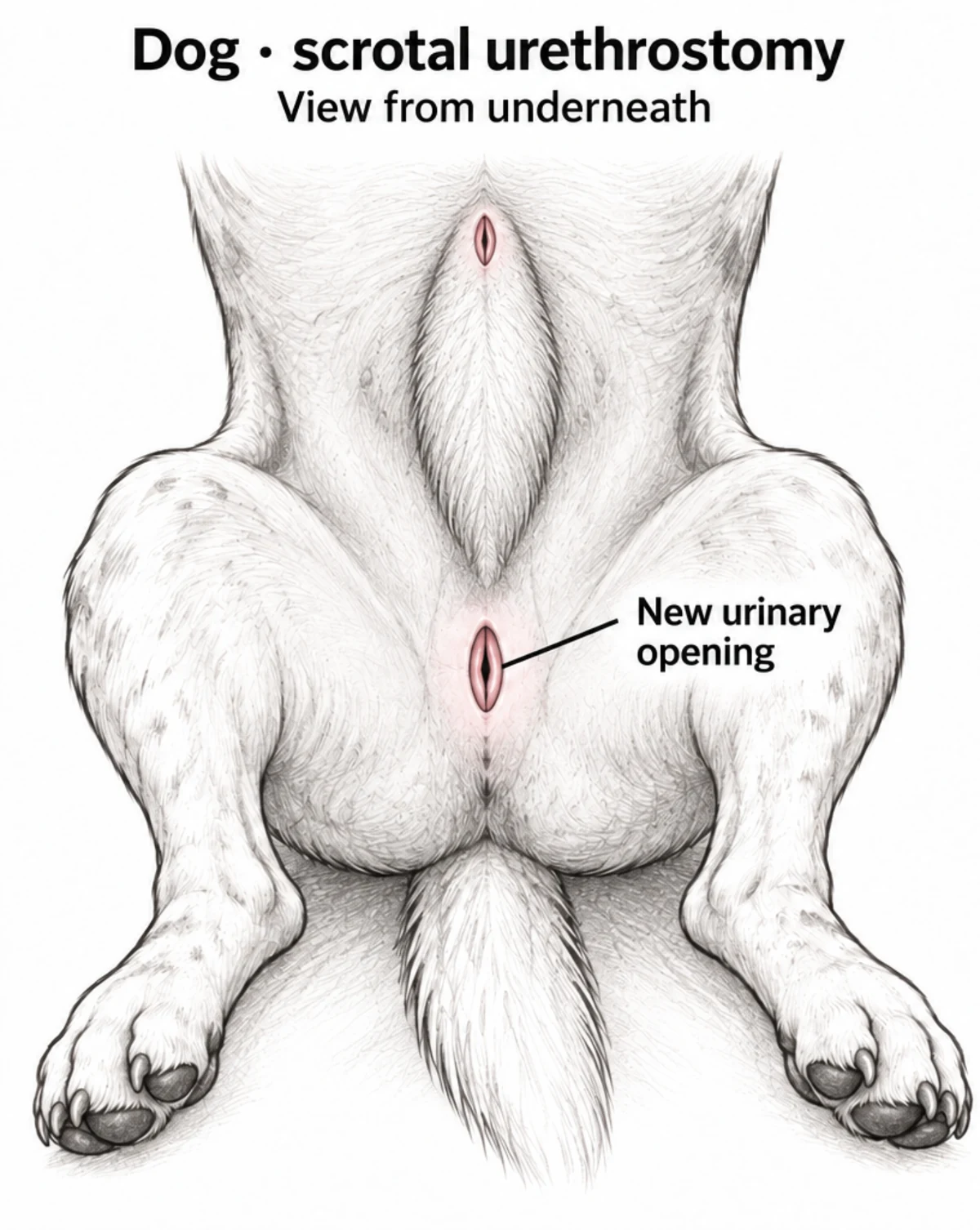
Creating a new urinary opening (urethrostomy)
A urethrostomy creates a permanent new opening for urine. In a male dog, one option is a scrotal urethrostomy, which bypasses the narrower urethra in the penis. It may be considered for a blockage that cannot be relieved, repeated stone obstruction or damaged urethra. The site depends on the problem. A wider outlet does not prevent new stones forming, and stones can still cause a blockage.
For cats: a new urinary opening (PU)
Cats with bladder stones may need bladder stone removal (cystotomy). PU is a different operation for selected male cats.
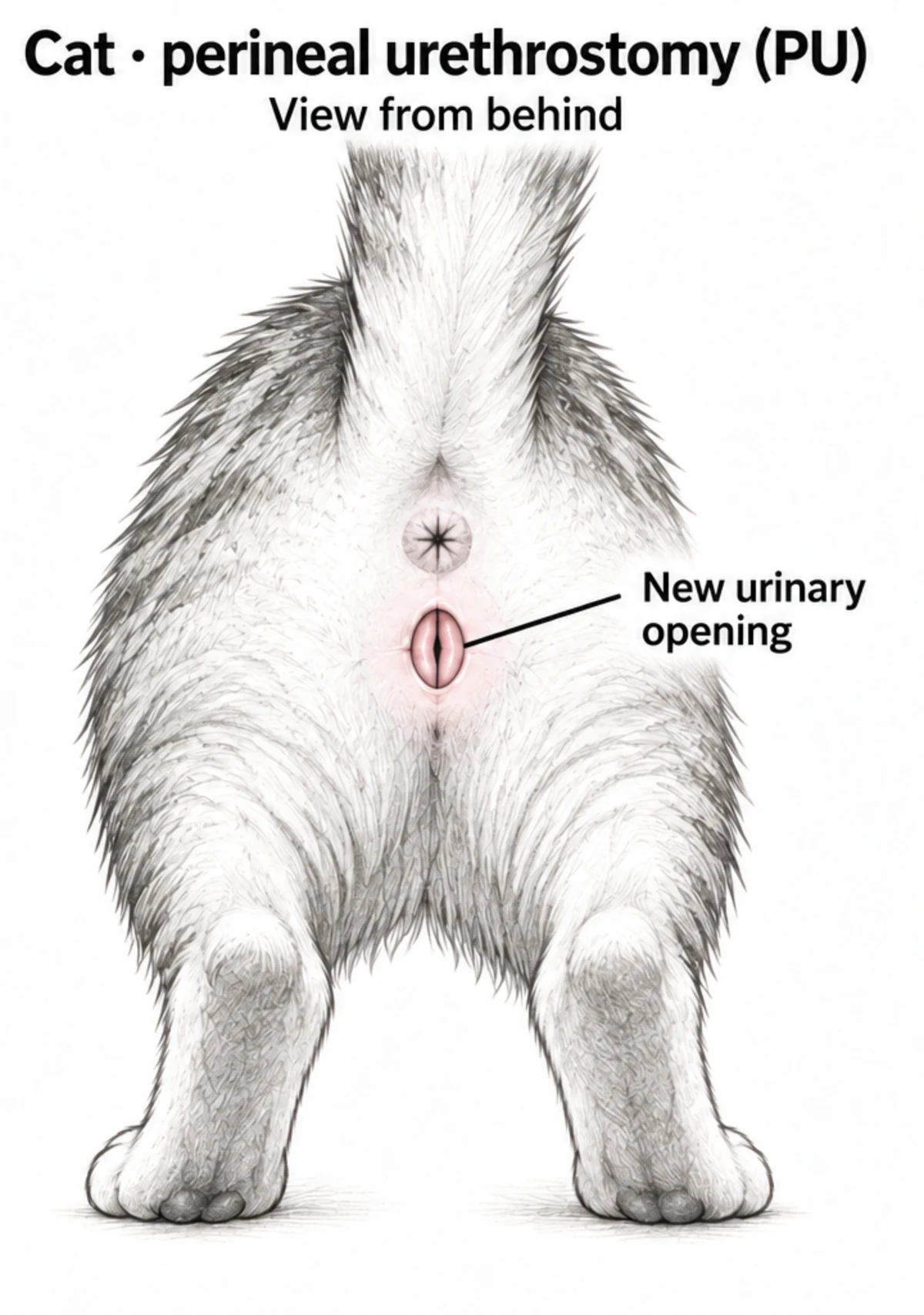
Bypassing the narrow part of the urine tube
A perineal urethrostomy, or PU, creates a wider opening below the anus, so urine bypasses the narrow part of the tube inside the penis. Urine leaves through this new opening. PU may be considered when a blockage cannot be relieved, keeps recurring, or there is damage to the narrow urethra.
The aim is to reduce the chance of another blockage at that narrow point. PU cannot guarantee that a blockage will never happen again.
PU does not cure the underlying bladder disease. Bladder inflammation, stones or infection can still need treatment. If bladder stones are present, they also need to be addressed. Discuss the operation and any further care your cat needs with the surgical team.
Recovery at home
Before you go home
The team monitors urine production, blood results, comfort and the ability to urinate after the catheter is removed. The hospital stay depends on your pet’s response and the operation.
What you’ll need to do
- Prevent licking with the prescribed collar. Licking can damage the wound and interfere with healing.
- Restrict activity as directed and follow the discharge plan for medicines and wound care.
- Watch for urine coming out, not just repeated attempts to urinate. Ask the discharge team how best to monitor this at home.
When to call urgently
Repeated straining with little or no urine needs immediate reassessment, even after surgery. Call your nearest emergency veterinary hospital now. If you are not sure whether urine is coming out, call rather than waiting for the next recheck.
Contact the team promptly for:
- Worsening pain or heavy or persistent bleeding.
- A swollen or leaking wound.
- Vomiting or marked tiredness.
Follow-up care
Follow the recheck plan in your pet’s discharge instructions. Stone removal does not prevent new stones forming. Your vet uses the stone results to plan diet, other treatment and monitoring. Cats with bladder inflammation may also need changes to water intake, diet and their home environment.
Possible complications
Risks include bleeding, infection, urine leakage, and scarring that narrows the urethra or new opening. Further treatment or surgery may be needed. Recovery also depends on kidney function and any damage caused by the blockage.
Veterinary teams: urinary obstruction referral checklist
Call to confirm transfer and surgeon availability. Continue stabilization; do not delay urgent transfer for tests or paperwork.
Send with the referral
- Urine flow and timeline: last normal urination, onset of signs, bladder findings and whether urine is currently draining.
- Previous episodes and procedures: obstruction, stones, catheterization, urinary surgery or trauma.
- Catheter attempts: timing, difficulty, catheter type/size, flushing, patency and any suspected urethral injury.
- Stabilization and response: vital signs, fluids, medicines, urine output and ongoing concerns.
- CBC/chemistry and electrolytes: include potassium, renal values, sample times and trends; send blood gas and ECG findings if performed.
- Urine results: urinalysis/culture, collection method and timing, and antimicrobial treatment already given.
- Original images and reports: include the bladder and entire urethra on existing studies; send contrast studies if performed.
Dog-specific details
- Stone location and clearance attempts: bladder versus urethral stones, whether stones could be retropulsed, and previous stone analysis.
- Suspected structural disease: narrowing, penile/prostatic disease or trauma, and any previous operative report.
Cat-specific details
- Recurrence and catheter course: prior episodes, catheter removal/re-obstruction timing, and imaging evidence of stones or injury.
- Previous PU or other urinary surgery: operative report, current opening/patency and any suspected stricture.
Sources and further reading
The operation depends on the cause and site of obstruction. Published results from different operations and patient groups cannot be used as one risk estimate for every blocked pet.
- ACVS: urinary obstruction in dogs.
- ACVS: urinary obstruction in male cats.
- Taylor and colleagues, 2025: iCatCare lower urinary tract disease guidelines.
- Seneviratne and colleagues, 2021: indications and complications of feline urethrostomy.
- Boone and colleagues, 2026: stone removal by open and modified percutaneous cystotomy in cats.
- Manchester and colleagues, 2024: catheterization and lower urinary tract tears in cats.