
Emergency surgery
GDV: a bloated and twisted stomach
A stomach that fills with gas and twists can cut off blood flow. Your dog needs emergency treatment.
Overview
What has happened to the stomach?
GDV stands for gastric dilatation-volvulus. The stomach swells with gas and twists, trapping its contents. The swollen stomach presses on large blood vessels and can reduce blood returning to the heart.
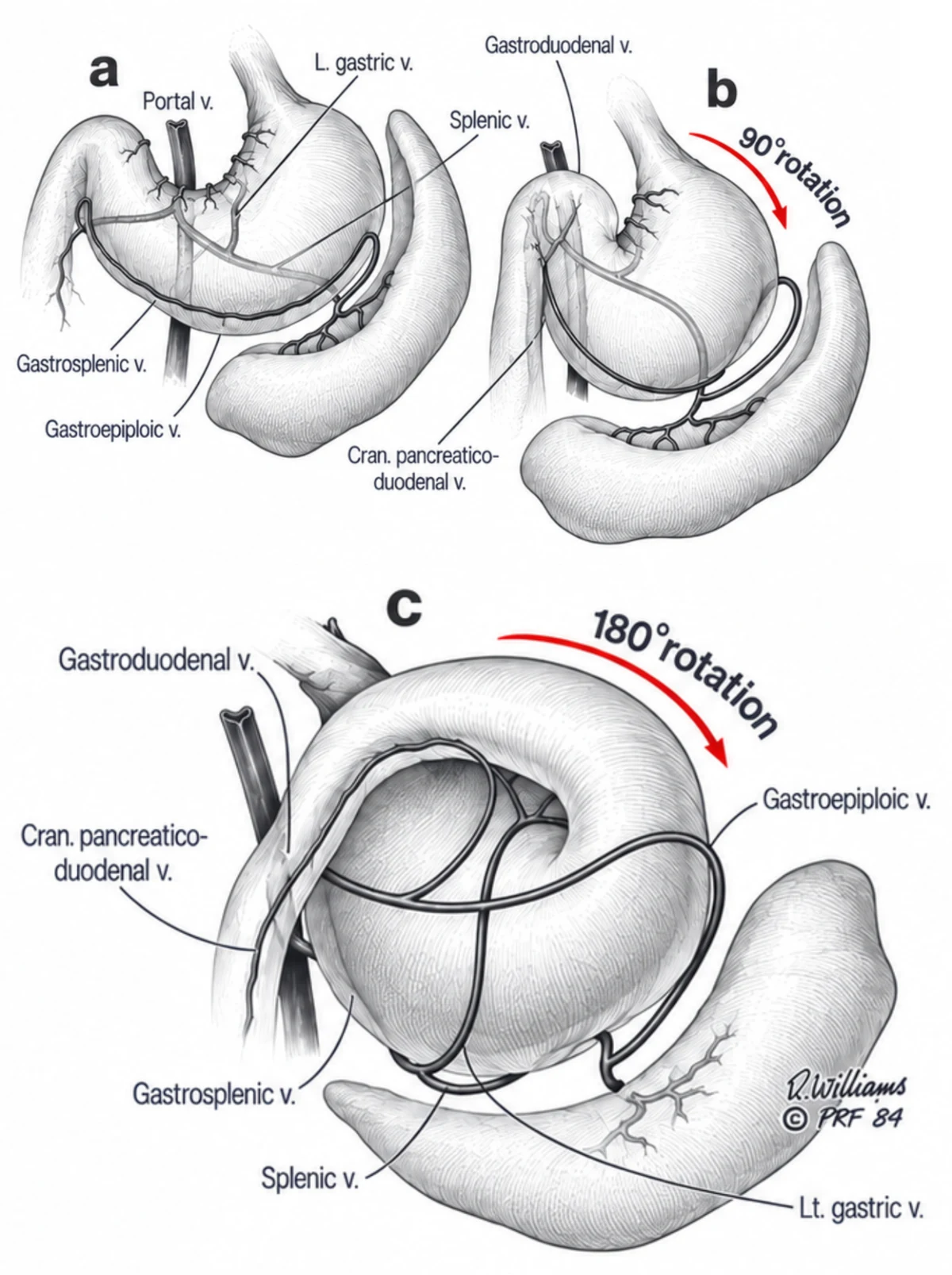
This can cause shock: too little blood reaches the body's organs. The twist can also cut off blood supply to the stomach and the spleen, an organ beside the stomach. Parts of these organs may become badly damaged.
Signs and symptoms
A dog may keep trying to vomit but bring up little or nothing. Other signs include:
- Restlessness, drooling or signs of belly pain.
- A swollen belly or rapid breathing.
- Weakness, pale gums or collapse.
Seek emergency care immediately. GDV is more common in large, deep-chested dogs, but other dogs can be affected. A dog does not need to show every sign before you call.
Diagnosis
The team checks your dog's circulation and breathing while starting urgent treatment. Belly X-rays help confirm whether the stomach has twisted.
Blood tests check for changes caused by shock and help guide care. One result is lactate, which can rise when tissues are not getting enough blood. The team considers lactate alongside the examination and your dog's response to treatment.
An ECG records the heart's electrical activity to check for an abnormal rhythm. The team continues monitoring during and after surgery because rhythm changes can appear later.
Treatment
Fluids, pressure relief and surgery
Fluids into a vein help treat shock. The team also releases gas from the stomach. Surgery is still needed to correct the twist and check for damaged tissue.
Your dog is fully asleep under general anaesthesia. Dr. Wood returns the stomach to its normal position through an opening in the belly and checks the stomach and spleen for damage. Sometimes part of the stomach or the spleen must be removed.
A gastropexy attaches the stomach to the inside of the body wall to reduce the risk of another twist. The stomach can still fill with gas afterward, so new bloating or repeated attempts to vomit still need urgent assessment.
Aftercare and outcome
Your dog stays in hospital while the team monitors circulation, heart rhythm, pain and stomach function. Recovery depends partly on the damage caused by shock and loss of blood supply.
Problems can include abnormal heart rhythms, bleeding, infection, poor stomach movement and damage to other organs. Severe illness can be fatal despite treatment.
At home, protect the wound from licking and restrict activity while it heals. Follow the feeding, medicine and recheck plan given at discharge.
Contact the hospital caring for your dog promptly about repeated vomiting, poor appetite, worsening pain or changes around the wound. New attempts to vomit with little or nothing coming up, belly swelling, breathing difficulty or collapse need emergency care. Call your nearest emergency veterinary hospital immediately for these signs.
Veterinary teams: GDV referral checklist
Call the receiving hospital to confirm transfer and surgeon availability. Continue stabilization; do not delay transfer for paperwork or repeat lactate.
Send available records
- Onset/time first seen; mentation and ability to walk.
- Perfusion, BP, current support and response.
- Fluids, decompression, drugs and times.
- Original radiographs and results: CBC, chemistry/electrolytes, blood gas, ECG.
- Lactate values and sample times; treatment before each sample.
GDV assessment and lactate: evidence for veterinary teams
Record the duration to first presentation, mentation and ability to walk; distinguish a dog that was carried from one unable to walk. Send the current support and initial/repeat lactate values, sample times and treatment between samples.
The post-treatment lactate cutoff of 6.4 mmol/L in the Zacher study was derived in the subgroup with initial lactate above 9 mmol/L. Do not use a single lactate threshold to make treatment decisions or delay urgent care.
Sources for this guide
ACVS: gastric dilatation-volvulus · Merck Veterinary Manual: GDV