27 in 100 dogs
Not cancer
Removing the lump may resolve the bleeding problem and leave the possibility of years of good life. It cannot promise that outcome.
 Dr. Chris Wood
BSc, DVM (Dist), MS
Emergency surgery
Blood leaking inside the belly can make a dog suddenly weak or cause collapse. A bleeding lump on the spleen is one possible cause.
Blood normally travels through the body inside blood vessels. With internal bleeding, it leaks out of those vessels. In this guide, the blood is collecting in the space around the organs in the belly, also called the abdomen.
With enough blood loss, less blood and oxygen reach the organs. This can make a dog very weak or cause collapse. The bleeding can be life-threatening, even when you cannot see blood outside the body.
Your vet may call blood in the belly a hemoabdomen. A dog may have seemed well before suddenly becoming unwell.
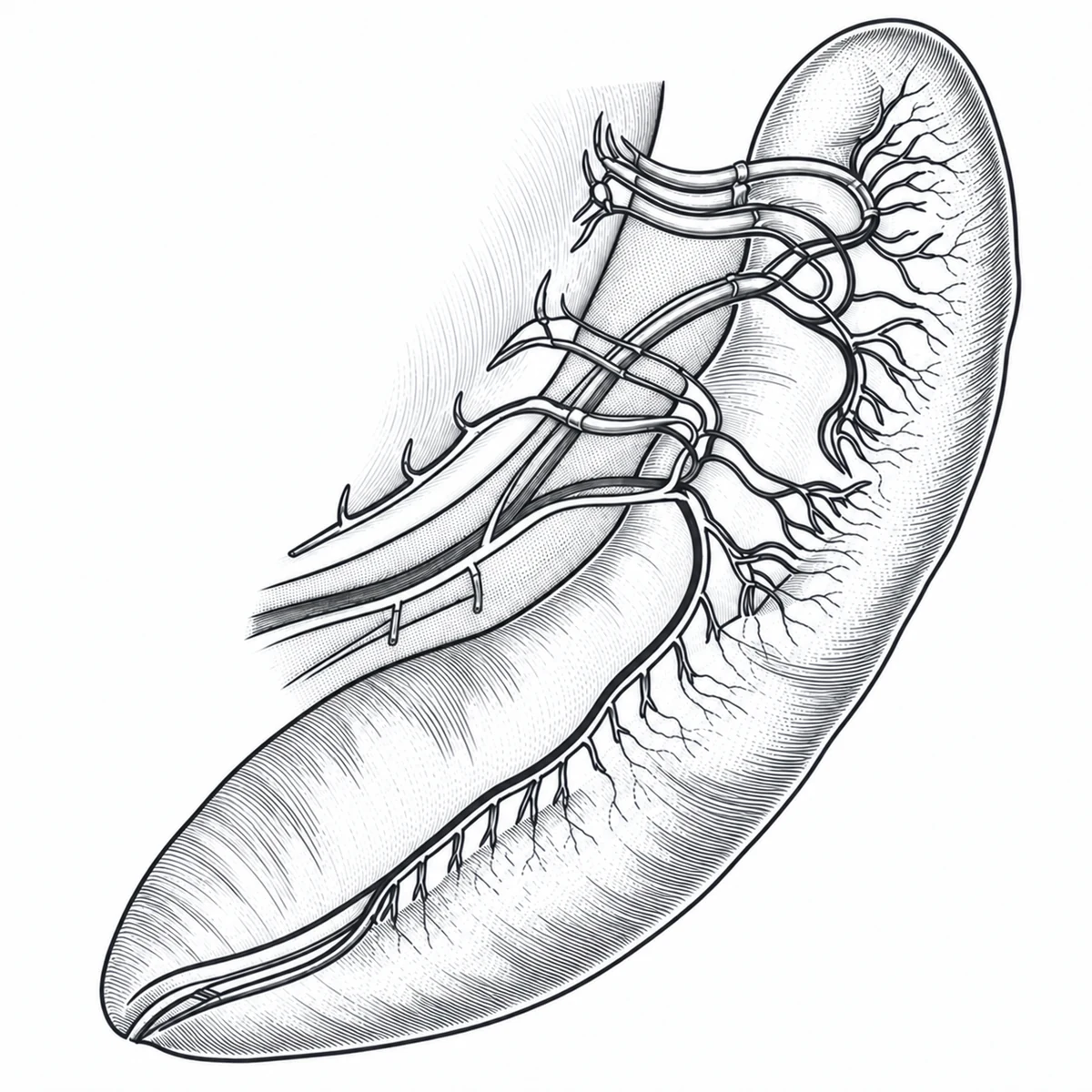
The spleen is an organ near the stomach. It helps the body deal with infection and recycle old blood cells. Many blood vessels supply it.
A lump or growth on the spleen is often called a mass. If it splits open, or ruptures, it can bleed into the belly. Both cancerous and noncancerous lumps can bleed.
Injuries, problems with blood clotting and other organs can also cause internal bleeding. This guide focuses on the surgery decision when the spleen may be the source.
A dog with internal bleeding may:
Your dog does not need to show every sign. Call your nearest emergency veterinary hospital immediately. Do not wait for an email reply.
These signs mean your dog needs help. They do not show where the bleeding started or whether a lump is cancer.
The team checks how the blood loss is affecting your dog and starts urgent treatment.
Fluids through a vein help support blood flow around the body. Some dogs also need a blood transfusion to replace blood they have lost.
Tests help find the cause and guide treatment:
Scans and blood tests can raise or lower concern about cancer, but they cannot reliably tell every noncancerous lump from cancer.
When the spleen is removed, it goes to a laboratory. A specialist examines the tissue under a microscope to find out what the lump is. This test is called histopathology. The result may describe the lump as benign (not cancer) or malignant (cancer).
The laboratory result comes after the operation. A decision about urgent surgery may be needed before the exact diagnosis or outlook is known.
Dr. Wood uses your dog’s condition and test results to discuss the possibility of cancer. One concern is hemangiosarcoma, a cancer of blood-vessel cells.
In suitable cases, a tool called the HeLP score helps with that discussion. A high score is not proof of cancer, and a low score does not rule it out. It cannot make the decision for you.
Start with Tufts T-STAT → · Use the HeLP calculator →
For suitable dogs with internal bleeding that was not caused by an injury, HeLP combines body weight, blood protein, platelet count and chest X-ray findings. It helps assess concern about hemangiosarcoma, a cancer of blood-vessel cells. A high score is not proof of cancer; a low score does not rule it out.
T-STAT estimates malignancy among dogs with splenic masses, with or without hemoabdomen, using bloodwork and ultrasound findings. HeLP was developed for dogs with nontraumatic hemoabdomen and predicts HSA. These are different populations and outcomes.
Hillier's 2024 external study found cumulative HeLP AUC 0.79, categorical HeLP AUC 0.73, and T-STAT AUC 0.68. AUC measures discrimination; it is not an individual probability. Neither replaces histopathology or justifies euthanasia by itself.
If the spleen is the source of bleeding, removing it may stop that bleeding. It also provides tissue for the laboratory to test.
Removing the whole spleen is called a splenectomy. Dogs can live without a spleen.
Your dog is fully asleep under general anaesthesia. Dr. Wood examines the organs through an opening in the belly. If the spleen needs to be removed, he closes off the blood vessels attached to it and removes the spleen with the lump.
If the lump is noncancerous, removing it may resolve the bleeding problem. If it is cancerous, surgery may control the bleeding without curing the cancer. The outlook then depends on the type of cancer and whether it has spread.
Before deciding, discuss your dog’s condition, the risks of surgery and hospital care, what treatment could achieve and what remains uncertain with the surgical team. If surgery is unsuitable or your family does not choose it, ask what care is available and how to keep your dog comfortable.
For a dog well enough to have surgery, Dr. Wood generally favours it because some bleeding lumps turn out not to be cancer. Removing a noncancerous lump may resolve the problem and leave the possibility of years of good life. That chance matters even when there is concern about cancer.
Surgery is not the right choice for every dog. Consider your dog’s health and comfort, the demands of treatment and what your family can manage. You and the surgical team make this decision together before the laboratory result is available.
A review studied dogs whose internal bleeding came from a ruptured spleen lump, rather than an injury. Shown as a group of 100 dogs, the rounded findings were:
These are study-group findings, not a prediction for your dog or a measure of how long a dog will live.
27 in 100 dogs
Removing the lump may resolve the bleeding problem and leave the possibility of years of good life. It cannot promise that outcome.
73 in 100 dogs
Surgery may stop the bleeding without curing the cancer. The type of cancer and whether it has spread affect the outlook.
A lump found by chance during a scan is a different situation from a ruptured lump causing bleeding. The evidence was limited, so these numbers need to be treated cautiously.
This is an expected-benefit argument: weigh the chance of each possible outcome against the amount and quality of time associated with it. It explains Dr. Wood’s preference. It is not a trial proving that operating on every dog maximizes life-years.
A numerical comparison would need the average good-quality time with and without surgery for each group, including deaths around surgery and other illness. Published median survival times cannot simply be multiplied to produce that average. The review supplying the proportions included 1,150 dogs from 14 studies and reported low levels of evidence and high risk of bias.
The team monitors pain, blood loss and heart rhythm. Some dogs develop an irregular heartbeat after spleen surgery and may need treatment. The team decides when your dog is well enough to go home.
Dr. Wood explains what the lump is and what the result means for your dog. If it is cancer, its type and whether it has spread guide the discussion about further cancer treatment.
Healing from the operation and the longer-term outlook are separate questions. The tissue result and your dog’s other health problems both matter.
Your dog will still be healing after going home. Protect the belly wound from licking and keep activity controlled while it heals.
Follow your dog’s individual feeding, medicine, activity and recheck instructions. Ask the discharge team to explain anything you are unsure about.
If your dog becomes weak, collapses, has pale gums, develops a swollen belly or seems suddenly worse, seek emergency care immediately. Call your nearest emergency veterinary hospital.
For other recovery concerns, call the team caring for your dog. Do not wait for an email reply if your dog is unwell.
ACVS: splenic masses · Animal Medical Center: the spleen and spleen surgery · MSD Veterinary Manual: emergency care and circulation · Schick and Grimes: ruptured splenic masses
Call to confirm urgent transfer and surgeon availability. Do not delay stabilization or transfer for FNA or full staging.